
Nutrition, Lifestyle, and Mind-Body Strategies
Integrative PMDD Education:
This project summarizes key insights from my graduate capstone project, Integrative PMDD Education: Nutrition, Lifestyle, and Mind‑Body Strategies. It highlights an integrative, whole‑person approach to understanding PMDD and identifies opportunities to better support clients and clinicians through accessible, evidence‑informed education.

Purpose of the Project
To synthesize evidence on integrative, cycle‑informed strategies that:
Help clients understand their cycle patterns
Support emotional regulation and relational stability
Offer clinicians clear, accessible educational insights
Reduce overwhelm by focusing on small, doable practices
Encourage self‑leadership rather than self‑judgment



The project organizes the research into three key areas that consistently influence PMDD symptoms and overall well‑being.
1. Holistic Nutrition Foundations
Research suggests that nutrient status, inflammation, blood sugar regulation, and gut–brain interactions may influence PMDD symptoms. This area of research highlights:
Stabilizing nutrition patterns
Supportive micronutrients
Anti‑inflammatory dietary strategies
The role of consistent nourishment in emotional regulation
These tools are not presented as cures, but as supportive foundations that can improve resilience and reduce symptom intensity for many individuals.
2. Lifestyle Interventions
Lifestyle patterns — sleep, movement, stress load, and daily rhythms — play a significant role in how the nervous system responds to hormonal shifts.
This area includes:
Sleep hygiene and circadian support
Movement strategies tailored to cycle phases
Stress physiology education
Gentle, sustainable lifestyle adjustments
The emphasis is on small, doable changes that support nervous system stability throughout the month.
3. Mind–Body & Cognitive Behavioral Strategies
Mind–body and cognitive‑behavioral approaches are central to this research because PMDD affects both emotional and physiological systems.
This section includes:
Somatic grounding tools
Breathwork and interoceptive awareness
Cycle‑specific emotional regulation strategies
Trauma‑informed approaches to self‑leadership
Skills for navigating relational sensitivity during the luteal phase
These practices help individuals build internal capacity, reduce overwhelm, and respond to symptoms with more clarity and compassion.

Cycle Awareness as a Core Element
Understanding how symptoms shift across the menstrual cycle helps reduce confusion and self‑blame. Cycle awareness supports clients in identifying patterns, anticipating sensitive days, and planning gentle, supportive strategies in advance. It becomes a grounding tool that increases clarity and emotional steadiness throughout the month.

Why This Matters for Clients and Clinicians
PMDD is often misunderstood, minimized, or treated in fragmented ways. This integrative, evidence‑informed approach aims to:
Bridge the gap between clinical research and lived experience
Offer clients tools that feel compassionate and doable
Provide clinicians with clear, accessible educational insights
Support shared language and collaboration
Reduce stigma and increase understanding
The intention is not to replace medical care, but to complement it with practical, supportive strategies rooted in both research and real‑world experience.
This work does not outline a full clinical program but highlights where integrative education and supportive tools are most needed.
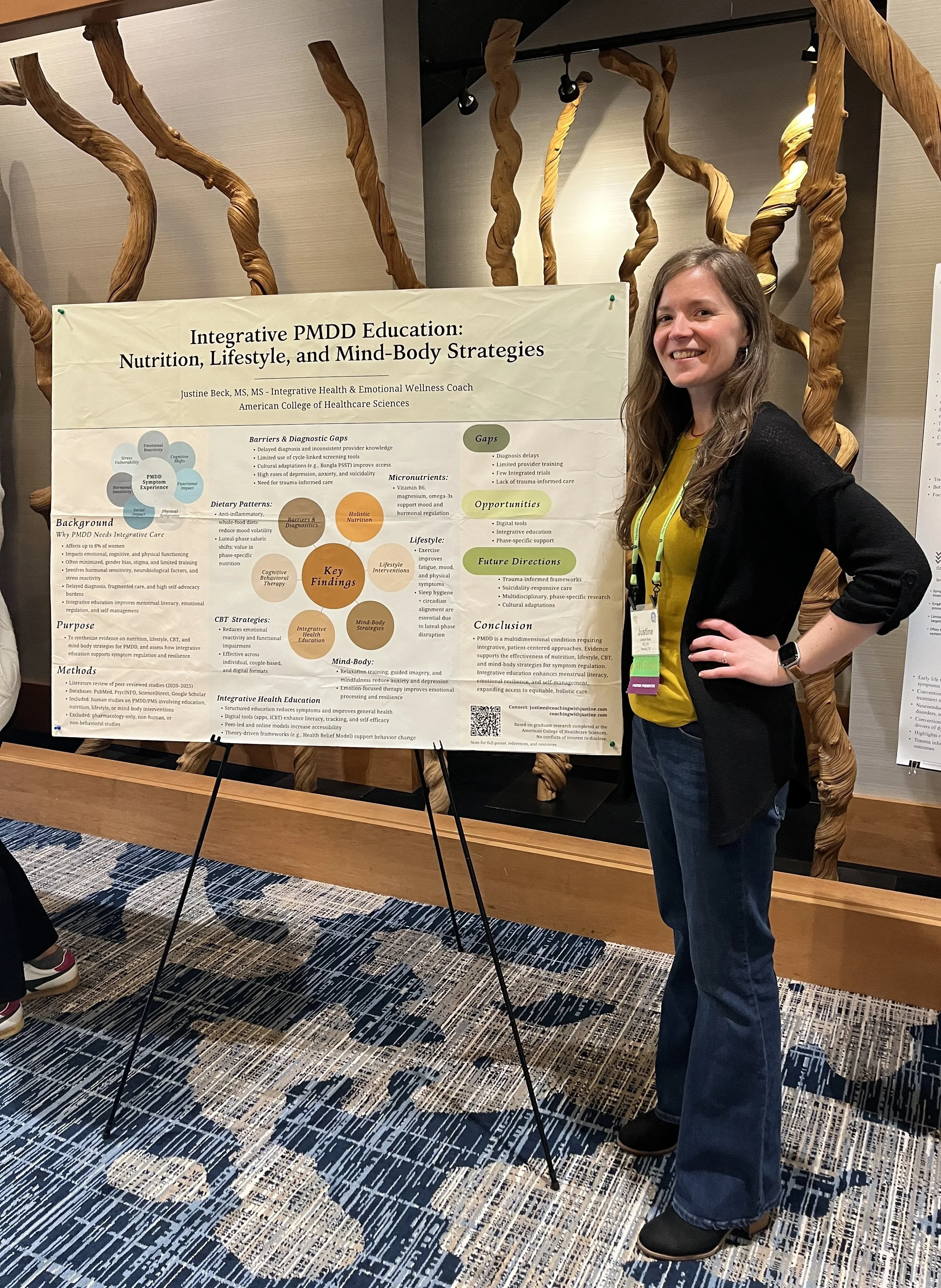
Connection to the Full Capstone Project
This project is based on my literature review for my dual master’s program in holistic nutrition and integrative health sciences, Integrative PMDD Education: Nutrition, Lifestyle, and Mind‑Body Strategies. The capstone synthesizes current research on PMDD and highlights the need for more accessible, integrative, and trauma‑informed education for both clients and clinicians. While it does not present a full intervention or program, it identifies key opportunities for future development of supportive tools and resources. This poster reflects the core themes and insights that emerged from that work.
Resources & Downloads
-
![]()
Abstract Poster
HealCon 2026
-
![]()
Integrative Health Coaching Support
1:1 support for cycle‑informed well‑being
-
![]()
References
Capstone & Abstract Poster Sources